Understanding People in National Costumes Flat Icons for Digital Design
In the evolving landscape of digital interface design, visual communication relies heavily on clarity and cultural resonance. One specific asset that has gained traction among designers working on multicultural platforms is the People in National Costumes Flat Icon. This vector illustration serves as a symbolic representation of global diversity, tradition, and cultural heritage. Specifically, variations such as the Norwegian isolated vector sign offer a focused way to represent specific national identities within broader applications. Understanding the utility, aesthetic value, and technical considerations of these icons is essential for designers, developers, and content creators aiming to build inclusive and visually coherent web experiences.
Defining the Asset: What Is It?
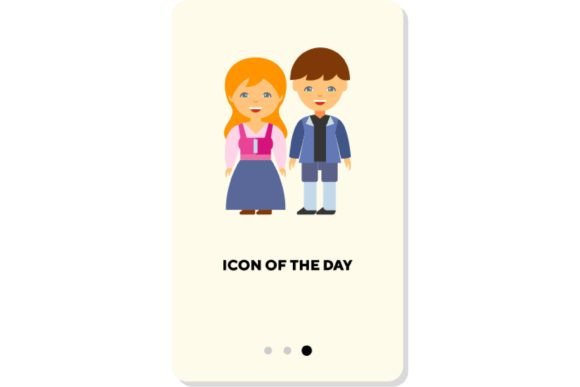
The People in National Costumes Flat Icon is a graphic element designed in a flat style, characterized by minimalistic shapes, solid colors, and a lack of three-dimensional effects like shadows or gradients. These icons typically depict figures wearing traditional attire associated with specific countries or regions. For instance, a Norwegian variant might feature elements reminiscent of the bunad, the traditional folk costume of Norway, rendered in simplified geometric forms.
As a vector illustration, the asset is scalable without loss of quality. This makes it ideal for various digital environments, from small mobile app buttons to large website headers. The "isolated" nature of the sign means the figure is presented against a transparent or neutral background, allowing seamless integration into different color schemes and layout structures. The primary concept behind these icons is to convey ideas related to clothes, tradition, tourism, and international cooperation through immediate visual recognition.
Why Designers Choose National Costume Icons
The decision to incorporate national costume icons into a project usually stems from a need to communicate cultural specificity quickly. In user interface (UI) design, space is often limited. Text labels can be cumbersome, especially when dealing with multiple languages. A well-designed icon acts as a universal shorthand. When users see a figure in traditional dress, they immediately associate it with concepts of heritage, local identity, or international travel.
Furthermore, there is a growing emphasis on inclusivity and representation in digital products. Using icons that reflect diverse cultural backgrounds helps create a sense of belonging for users from different regions. It signals that the platform acknowledges and respects global diversity. For travel agencies, educational platforms, or international news outlets, these icons provide a visual anchor that aligns with their content strategy.
Benefits and Practical Applications
Integrating the People in National Costumes Flat Icon offers several tangible benefits for web design and app development:
- Visual Consistency: Flat icons adhere to modern design trends, ensuring that the asset blends seamlessly with other UI elements like buttons, menus, and cards.
- Scalability: Being vector-based, these icons remain crisp on high-resolution displays, including Retina screens and 4K monitors, which is crucial for maintaining professional quality.
- Cultural Context: They provide immediate context. For example, in a language selection menu, a Norwegian icon can help users identify the language option faster than reading text alone.
- Engagement: Colorful and distinct traditional costumes can make interfaces more engaging and less sterile, adding a human element to digital interactions.
Situations where this asset is a strong fit include tourism websites highlighting local experiences, educational apps teaching world cultures, and international e-commerce platforms segmenting products by region. In these contexts, the icon serves not just as decoration but as a functional navigational aid.
Tradeoffs and Considerations
While useful, relying on national costume icons requires careful consideration. One significant tradeoff is the risk of stereotyping. Traditional costumes are often complex and varied within a single country. Reducing them to a simple flat icon may oversimplify cultural nuances. Designers must ensure that the representation is respectful and accurate. For example, the Norwegian bunad has many regional variations; using a generic or inaccurate depiction could alienate users who value cultural precision.
Another consideration is recognizability. Not all users may immediately identify a specific national costume, especially if the design is highly abstracted. If the icon is too stylized, it might fail to communicate its intended meaning, leading to confusion. In such cases, pairing the icon with a text label is a prudent strategy to ensure clarity.
Additionally, there is the issue of visual clutter. If a design requires representing dozens of countries, using detailed costume icons for each can create a chaotic interface. In scenarios requiring extensive lists, simpler flags or standardized country codes might be more effective and less visually demanding.
When to Consider Alternatives
There are situations where the People in National Costumes Flat Icon may not be the optimal choice. If the primary goal is strict geographic identification without cultural connotation, standard flag icons are often more universally recognized and easier to process cognitively. Flags are standardized symbols with clear political and geographic associations, whereas costumes can carry subjective cultural interpretations.
For highly technical or corporate applications where neutrality is paramount, abstract avatars or generic user icons may be preferable. These avoid any potential cultural bias or misinterpretation. Similarly, if the design system relies on line art or outlined icons rather than filled flat styles, a national costume icon in flat style would clash aesthetically, requiring custom redesign to maintain consistency.
Making the Right Decision for Your Project
To determine whether this asset aligns with your goals, evaluate the core message of your interface. Are you emphasizing cultural heritage, tourism, or human connection? If so, the People in National Costumes Flat Icon is a powerful tool. It adds warmth and specificity that generic icons lack. However, if your priority is speed, neutrality, or handling a vast number of regions, consider whether simpler symbols might serve your users better.
Technical implementation is also key. Ensure that the vector file format (such as SVG) is optimized for web performance. Large, complex vectors can slow down load times, negatively impacting user experience and SEO. Simplify paths where possible without losing the defining characteristics of the costume.
Ultimately, the value of the Norwegian isolated vector sign or any similar national costume icon lies in its ability to bridge cultural gaps through design. By balancing aesthetic appeal with functional clarity and cultural sensitivity, designers can create interfaces that are not only beautiful but also meaningful and inclusive. Careful evaluation of your audience’s needs and the context of use will guide you in deciding whether this specific type of iconography is the right fit for your digital product.