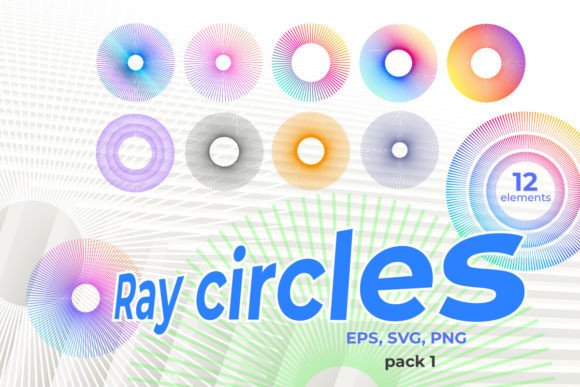
Ray Circles. Geometric Design Elements: Integrating Vector Assets into Professional Workflows
In the landscape of modern digital design, efficiency and aesthetic precision are not mutually exclusive; they are interdependent. Designers, marketers, and content creators constantly seek assets that bridge the gap between conceptual vision and technical execution. Ray Circles. Geometric Design Elements represents a specialized collection designed to meet this need, offering twelve distinct circular motifs constructed from radiating rays with gradient fills. While the visual appeal is immediate, the true value of these assets lies in their versatility and technical robustness. Understanding how to integrate such vector-based resources into your broader creative process can significantly enhance workflow efficiency, brand consistency, and final output quality.
The Role of Geometric Assets in Visual Communication
Geometric shapes, particularly circles and radial patterns, have long been staples in graphic design due to their psychological impact. Circles suggest unity, continuity, and focus, while rays imply energy, expansion, and direction. When combined, as seen in Ray Circles. Geometric Design Elements, they create dynamic focal points that draw the viewer’s eye without overwhelming the surrounding content. These elements are not merely decorative; they serve functional roles in layout hierarchy, guiding attention to key information or separating content blocks.
For professionals working in corporate identity, web design, or print media, having a library of pre-designed, high-quality geometric elements reduces the time spent on repetitive drafting. Instead of constructing complex radial gradients and alignment paths from scratch for every project, designers can leverage these ready-made components. This shift allows more mental bandwidth to be dedicated to strategic decisions, such as color theory application, typography pairing, and overall user experience.
Technical Specifications and File Compatibility
A critical aspect of any digital asset is its compatibility with existing tools and platforms. The Ray Circles. Geometric Design Elements collection is engineered to fit seamlessly into diverse technical environments. The package includes multiple file formats, each serving a specific purpose in the production pipeline:
- SVG Files: Scalable Vector Graphics are essential for web development and responsive design. They ensure that the ray circles remain crisp on any screen resolution, from mobile devices to 4K monitors, while keeping file sizes small for faster loading times.
- EPS Vector File: Encapsulated PostScript is the industry standard for professional printing and advanced vector editing software like Adobe Illustrator. This format allows for infinite scaling without quality loss, making it ideal for large-format prints such as banners, billboards, or packaging.
- PNG Files: The inclusion of twelve high-quality PNG files at 300dpi with transparent backgrounds provides immediate usability for non-designers or quick mockups. These are perfect for drag-and-drop applications in presentation software, social media graphics, or word processing documents where vector editing capabilities are limited.
- JPEG Previews: These files facilitate easy browsing and selection within the archive, streamlining the asset management process before integration begins.
This multi-format approach ensures that whether you are a freelance web developer, a print shop owner, or a marketing manager creating internal reports, you have the right tool for the job. The ability to switch between vector and raster formats without needing conversion tools saves valuable time and prevents potential quality degradation during file translation.
Customization and Brand Alignment
One of the most significant advantages of using vector-based geometric elements is the ease of customization. The Ray Circles. Geometric Design Elements feature color gradient fills that can be modified to match any brand palette. In a professional workflow, maintaining brand consistency is paramount. Generic stock assets often clash with established brand guidelines, requiring extensive rework. However, because these elements are vector-based, changing the gradient colors is a straightforward process in any vector editing software.
For instance, a corporate identity project might require a subtle, monochromatic gradient to convey professionalism and stability. In contrast, a promotional campaign for a tech startup might benefit from vibrant, high-contrast neon gradients to evoke innovation and energy. The flexibility to adjust these parameters means the same set of twelve designs can serve multiple clients or projects over years, maximizing the return on investment for the asset purchase.
Integration Across Different Project Phases
Understanding when and how to deploy these elements can optimize various stages of a project lifecycle. Here is how Ray Circles. Geometric Design Elements can be integrated into different phases of work:
Pre-Production and Planning
During the brainstorming and mood-boarding phase, these elements can help visualize spatial relationships. Using the PNG previews, teams can quickly assemble rough layouts to determine if radial symmetry fits the intended message. This early testing prevents costly revisions later in the design process by establishing a visual direction that balances complexity with clarity.
Active Design and Development
In the execution phase, the SVG and EPS files become central. Web designers can embed SVG code directly into HTML/CSS, allowing for interactive effects such as hover states or animations. Print designers can import the EPS files into layout software like InDesign, ensuring that the rays align perfectly with text columns or other graphical elements. The precision of vector paths guarantees that even intricate details of the rays remain sharp, regardless of the scale.
Post-Production and Distribution
When preparing final deliverables, the high-resolution PNGs offer a safety net for platforms that do not support vector formats. Social media managers, for example, can use these files to create engaging posts without worrying about pixelation. Additionally, the consistent style of the twelve elements ensures that a series of related materials—such as a slide deck, a brochure, and a website banner—maintain a cohesive visual language.
Practical Tips for Effective Usage
To get the most out of Ray Circles. Geometric Design Elements, consider the following practical implementation strategies:
- Layering and Depth: Use the transparency of the PNGs or the blending modes in vector software to layer multiple ray circles. This creates depth and complexity, turning simple geometric shapes into intricate background textures.
- Contrast Management: Since the elements feature gradients, ensure there is sufficient contrast between the rays and the background. Light gradients may disappear on white backgrounds, so adjust the opacity or add a subtle drop shadow to maintain visibility.
- Modular Design: Treat the twelve elements as a modular system. You do not need to use them all at once. Select one or two that best complement your layout’s whitespace and typographic hierarchy. Overusing geometric elements can lead to visual clutter.
- File Organization: Upon downloading the zip archive, organize the files into subfolders by format (SVG, PNG, EPS). This simple step reduces search time during intense project deadlines and helps maintain a clean digital workspace.
Long-Term Value and Scalability
Investing in high-quality vector assets like Ray Circles. Geometric Design Elements is a decision that pays dividends over time. Unlike raster images that degrade when resized, vector files are future-proof. As display technologies evolve and screen resolutions increase, these assets will continue to perform flawlessly. For businesses and freelancers, this means building a reusable library of resources that can be adapted for new trends without needing to repurchase similar assets.
Furthermore, the simplicity of the geometric design ensures longevity in style trends. While ornate and highly detailed illustrations may fall out of favor, clean geometric forms remain a cornerstone of modern minimalism and functional design. This timeless quality makes the collection a reliable staple in any designer’s toolkit.
In conclusion, Ray Circles. Geometric Design Elements offers more than just visual appeal; it provides a practical solution for enhancing workflow efficiency, ensuring technical compatibility, and maintaining brand consistency. By understanding the technical specifications and integrating these assets thoughtfully into your design process, you can elevate the quality of your projects while saving valuable time and resources. Whether used for web interfaces, printed collateral, or corporate branding, these vector elements stand as a testament to the power of well-crafted, versatile design tools.