Visualizing Conflict: The Role of Vintage Military Icons in Modern Digital Design
In the rapidly evolving landscape of web design and digital communication, visual shorthand has become essential. Users scan content rather than read it word for word, making icons a critical component of user experience (UX). Among the vast array of available graphic elements, the Under Attack Flat Icon. History Vintage stands out as a unique fusion of historical aesthetic and modern functional clarity. This specific vector illustration does more than just signal danger; it evokes a sense of urgency rooted in historical context, bridging the gap between antique military symbolism and contemporary interface needs.
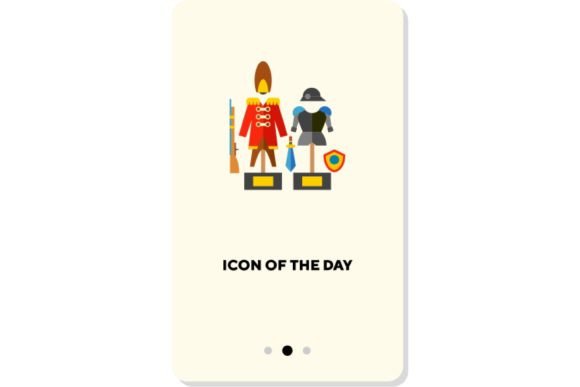
When designers incorporate a military uniform on display at the museum isolated vector sign or similar heritage-themed graphics, they are tapping into a deep well of cultural recognition. These elements are not merely decorative. They serve specific purposes in storytelling, branding, and instructional design. Understanding how to effectively utilize these vintage-inspired assets can elevate a project from generic to memorable.
The Intersection of History and Modern UI
The concept of the "flat icon" emerged as a reaction against skeuomorphism—the design trend that mimicked real-world textures like leather, wood, and metal. Flat design stripped away these details to focus on usability and speed. However, pure minimalism can sometimes feel cold or sterile. This is where the Under Attack Flat Icon. History Vintage offers a compelling alternative. By retaining the clean lines and scalability of flat design while infusing it with the color palettes, shapes, and motifs of historical military equipment, designers achieve a warm, authoritative aesthetic.
Consider the visual language of a museum exhibit. A military and equipment concept displayed behind glass tells a story of strategy, defense, and history. When translated into a vector illustration symbol elements for web, this narrative is preserved but optimized for digital consumption. The icon becomes a gateway to information, suggesting that the content behind it is serious, well-researched, or related to security and protection.
Key Characteristics of Vintage Military Vector Assets
To effectively use these icons, one must understand their defining traits. Unlike generic alert symbols, a vintage-style under attack icon often features specific design choices:
- Muted Color Palettes: Instead of bright, neon reds, these icons often utilize olive drabs, rusted oranges, sepia tones, and faded blues. This reduces eye strain and fits seamlessly into sophisticated, content-heavy layouts.
- Simplified Silhouettes: The "flat" aspect ensures that complex historical details—such as the intricate buttons on a vintage uniform or the specific shape of a helmet—are reduced to their most recognizable forms. This maintains legibility at small sizes.
- Historical Accuracy in Symbolism: Whether it represents a breach in defense or a call to arms, the imagery often draws from specific eras, such as World War I or II, adding a layer of gravitas that modern abstract shapes lack.
These characteristics make the Under Attack Flat Icon. History Vintage particularly suitable for industries that value tradition, security, and reliability. It is not just an icon; it is a brand statement.
Practical Applications in Web and App Development
While the aesthetic appeal is undeniable, the primary function of any icon is utility. How does a vintage military icon fit into modern workflows? The answer lies in context. These assets are versatile and can be deployed across various sectors beyond just historical blogs or museum websites.
- Cybersecurity and Data Protection: In an era where digital threats are constant, security firms often struggle to differentiate themselves. Using a military and equipment concept icon suggests robust, battle-tested protection. It implies that the software acts as a digital fortress, guarding users against modern "attacks" with the discipline of a historical army.
- Gaming and Entertainment: Strategy games, historical simulations, and role-playing platforms heavily rely on immersive UI. An Under Attack Flat Icon. History Vintage fits naturally into menus, health bars, or alert systems within these games, maintaining thematic consistency without breaking the fourth wall.
- Educational Platforms: For e-learning modules focused on history, political science, or international relations, these icons serve as effective navigational aids. They help students quickly identify sections related to conflict, defense strategies, or historical timelines.
The key is alignment. If a brand’s voice is playful and whimsical, a vintage military icon might feel out of place. However, for brands aiming to project strength, heritage, and resilience, this visual choice is powerful.
Technical Considerations for Vector Implementation
One of the significant advantages of using a vector illustration symbol elements for web is scalability. Unlike raster images (JPEGs or PNGs), vectors are based on mathematical paths. This means the Under Attack Flat Icon. History Vintage can be scaled from a tiny favicon to a large hero banner without losing quality. This flexibility is crucial for responsive design, where layouts must adapt to smartphones, tablets, and desktop monitors.
When integrating these icons, developers should consider the following best practices:
- File Format Selection: SVG (Scalable Vector Graphics) is the standard for web icons. It allows for CSS styling, meaning you can change the color of the icon dynamically based on user interaction (e.g., hovering or clicking) without needing multiple image files.
- Accessibility: Always include appropriate ARIA labels or alt text. An icon of a vintage helmet or a breached shield should be described clearly for screen readers, ensuring that visually impaired users understand the context of the "under attack" status.
- Load Performance: While vectors are generally lightweight, complex paths can increase file size. Optimize the SVG code by removing unnecessary metadata and simplifying paths where possible to ensure fast loading times.
Enhancing Brand Narrative Through Visual Storytelling
Branding is no longer just about logos and taglines; it is about the entire sensory experience of interacting with a company. Visual elements play a pivotal role in this. By choosing a Under Attack Flat Icon. History Vintage, a brand is making a deliberate choice to associate itself with values such as endurance, strategy, and historical significance.
Imagine a financial advisory firm that specializes in protecting assets during market volatility. Using a generic warning triangle might induce panic. However, using a stylized, vintage-inspired shield or fortification icon conveys a message of preparedness and calm authority. It suggests that the firm has weathered storms before and has the historical wisdom to navigate current challenges. This subtle psychological cue can significantly impact user trust and engagement.
Furthermore, these icons can be part of a larger design system. If the military uniform on display at the museum isolated vector sign is used in one section, complementary icons—such as vintage binoculars for "search," a quill pen for "blog," or a compass for "navigation"—can create a cohesive visual language. This consistency helps users build a mental map of the website, improving usability and reducing cognitive load.
Choosing the Right Asset for Your Project
With countless resources available online, selecting the right vintage military icon requires careful consideration. Not all "vintage" styles are created equal. Some may lean too heavily into clutter, defeating the purpose of flat design. Others may be so abstract that the historical reference is lost.
When evaluating an Under Attack Flat Icon. History Vintage, ask yourself:
- Does the style match the rest of my interface?
- Is the historical reference accurate enough to be respectful but simplified enough to be clear?
- Can the colors be easily customized to match my brand palette?
- Does the icon convey the intended emotion—urgency, protection, or history?
It is also worth noting that these icons work best when used sparingly. Overusing thematic elements can make a design feel kitschy or dated. Use them as accent pieces to highlight key actions or statuses, allowing the clean whitespace and typography of the rest of the page to breathe.
In conclusion, the integration of historical aesthetics into modern digital tools offers a rich opportunity for differentiation. The Under Attack Flat Icon. History Vintage is more than a graphic; it is a tool for communication that leverages the weight of history to enhance present-day user experiences. By understanding its characteristics, technical requirements, and strategic applications, designers and developers can create interfaces that are not only functional but also deeply engaging and narratively compelling.